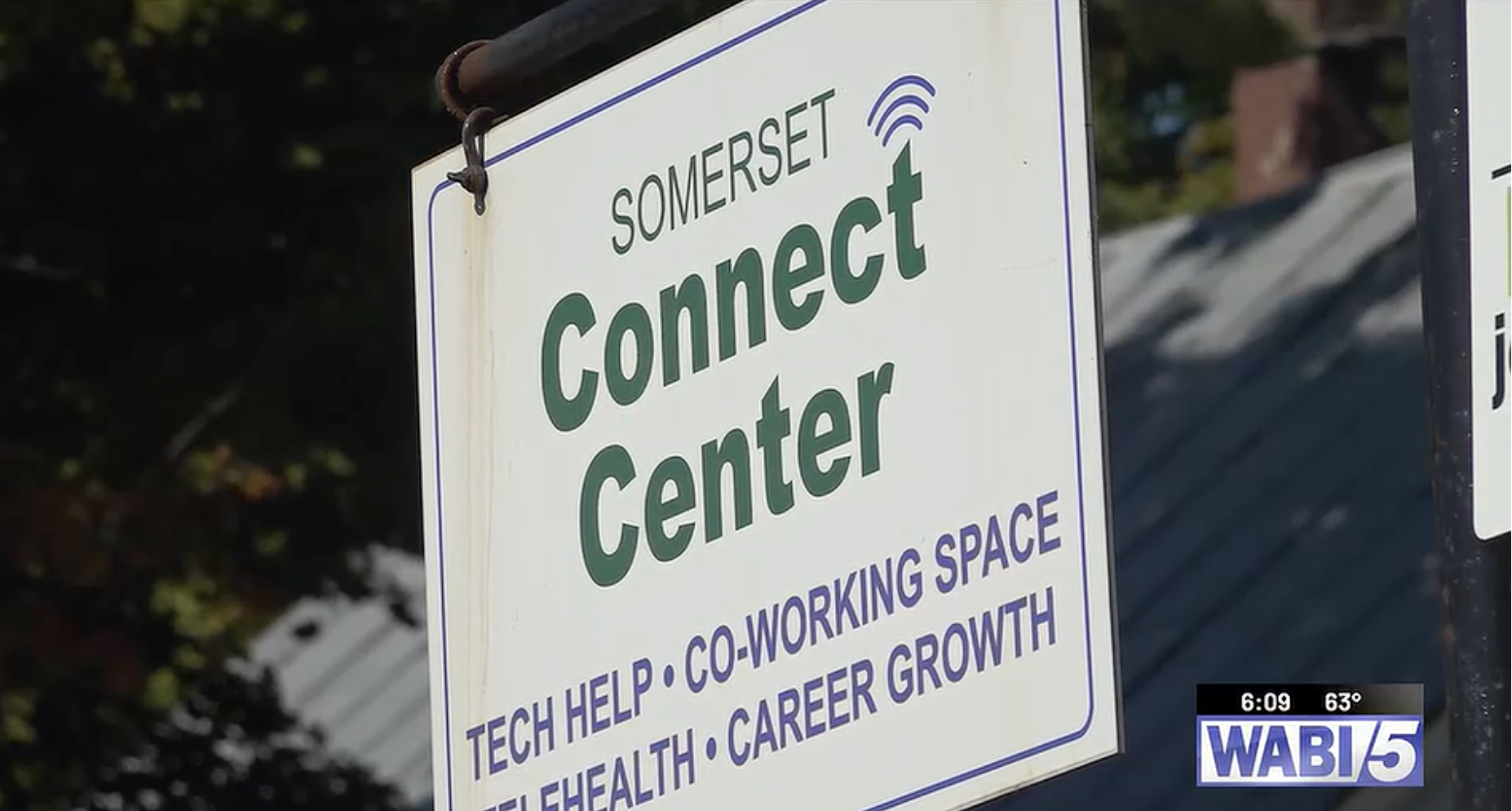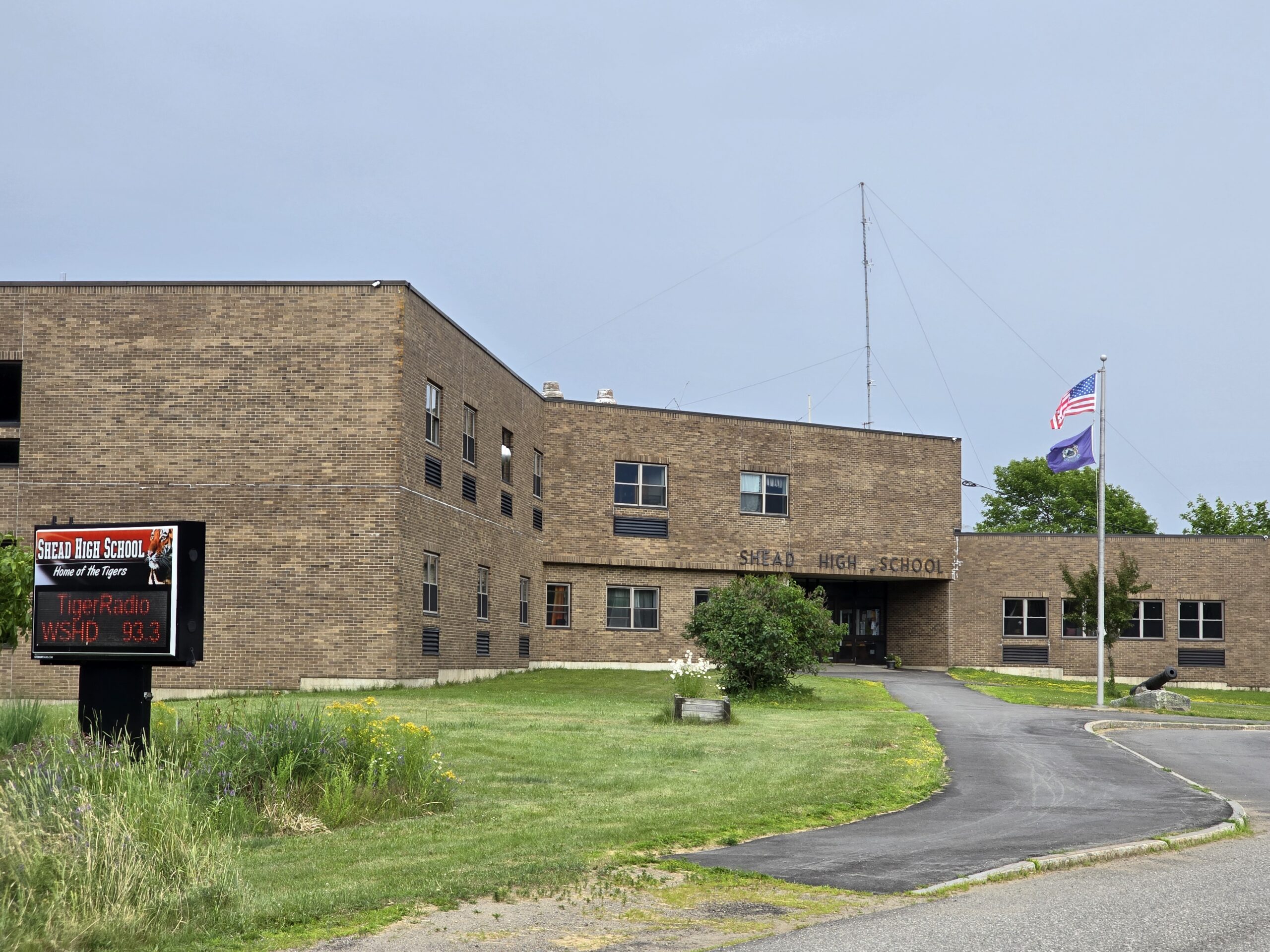
Melissa Mitchell knows exactly where you can and cannot get cell service near Shead High School. Stand in the right spot on the ball field across the street, she will tell you, and you might get lucky. Most places, you will not. It is the kind of detail you only know if you live it, and for the students and families of Eastport, Maine, it is simply part of daily life.
Shead High School sits on Eastport, an island town connected to the mainland by a causeway. But the school draws students from far beyond the island itself, across a catchment area of roughly 175 square miles of Washington County. Two thirds of Shead’s students live in what locals call “up country,” out along the mainland where cable does not always reach and cell towers are few and far between. For some families, satellite internet is the best option there is. For others, getting online at all means driving into town.
Melissa has spent years working to close that gap. She brought an FCC grant to the area to map out exactly where the connectivity deserts were, and she was part of the committee that eventually brought fiber internet to all of Eastport, not just the school and the town office. It is slow, steady work. And it is the kind of work that makes a program like Build IT possible.
Shead is what is known as a one to one school, meaning every student has a laptop and every teacher does too. On paper, that solves the technology gap. In practice, it does not.
“A lot of kids don’t feel comfortable taking their brand new MacBook Airs home,” Melissa said. “They don’t want it to break or get damaged.” And even when a student does bring one home, a school laptop loaded with restrictions is not always useful without reliable internet to back it up. Many families lean on cell phones instead, reading emails and web links on small screens because that is what actually works where they live.
Melissa saw an opportunity to fill that gap differently. When give IT. get IT. offered computer kits that students could build themselves and take home, no school restrictions attached, she signed up right away. It took a bit of persistence, but Melissa, who is the Principal of Shead High School, along with community partner Elaine Abbott, brought 20 desktop kits north to Eastport this year.
“Our kids took to them like ducks to water,” Melissa said. “They loved it.”
The kits did not arrive ready to use, and that was the point. Every Monday after school, a group of students gathered in the library with science teacher Ian Campbell, a self-described “computer nerd” who guided them through every piece of the build. They learned what each component did, took the machines apart, and put them back together. Along the way, they upgraded the RAM and swapped in better WiFi connectors, building on the newer Linux operating system that the give IT. get IT. team had already loaded onto each machine before it ever left the warehouse. Between the prep work on our end and the hands-on work at Shead, each kit became something that was truly theirs.
About 10 students showed up every week, roughly a tenth of the school’s population. “Some of them were the ones I expected, and a lot of them weren’t,” Melissa said. “That enthusiasm is infectious.”
Because these desktops belonged to the students, not the school, they could use them without a second thought, playing games, chatting with friends, and working on art and creative projects, all without wondering what website they could or could not reach. For a lot of these kids, it was the first computer their family could really call its own.
Getting the kits to Eastport in the first place took some creative problem solving. They shipped from Waterville in large wooden crates, sturdy enough to survive the trip but far too big for the average pickup truck. Shead partnered with Mano en Mano, a Milbridge-based organization, who hauled everything north in a U-Haul, and the students were waiting when the truck pulled in.
“That was probably a key element of it,” Melissa said. “They were there waiting for the truck to arrive. We built up the excitement.” They helped unload every box themselves, eager to get started.
Ask Melissa why this work matters, and she will tell you it was never really about the hardware.
“Most of the kids that I see, their aspirations fall into line with what they’re aware of,” she said. “When we can broaden their horizons, who knows what they’ll be capable of.”
Washington County has real industries within reach: aerospace manufacturing, renewable energy, and more, but students cannot picture a future in a field they have never encountered. Shead partners with Healthy Acadia and Rural Aspirations to offer Extended Learning Opportunities, connecting students to paid internships and apprenticeships tied to these local industries. Time spent building computers, or eventually teaching younger students how to do the same, can turn into real money in a student’s pocket and a real foothold in a career they never knew was possible close to home.
Melissa understands this from the inside. She grew up in the area, graduated from Shead, left for college, and came back. “I always knew I was going to come back,” she said. Now she is working to build the kind of future where more students can make that same choice. “How can we build the economic future here in Washington County?”
The momentum is not slowing down. Shead recently secured a 21st Century grant to fund after school programming, which will expand the Build IT kits into a broader STEM curriculum. Ian Campbell plans to take the program further into coding and application development, and Shead hopes to bring the Build IT model to middle schoolers, both at its neighboring elementary school and at other schools across the district.
There was one more bright spot this spring. Through the Eastport Digital Equity Committee’s efforts, five graduating seniors were gifted laptops to take with them after graduation, and give IT. get IT. matched that gift, bringing the total to 10, half of this year’s graduating class. Those students are heading off to college, into the military, and into building their own businesses, each with a computer of their own in hand.
“It would not have been possible for these students to have a laptop after they graduated without this support,” Melissa said.
That is really what this story is about. Not just kits and crates and Monday afternoons in the library, but the foundation being laid, one student and one computer at a time, for a region where young people can build a future without having to leave home to find it.
Programs like build IT. do not run on good intentions alone. They take devices, transportation, staff time, and partners willing to invest in students they may never meet. Shead is just one school. There are more communities across Maine facing the same gaps in access and opportunity, and more students ready to build something of their own if given the chance.
If your business or organization wants to help bring programs like this one to more schools, we would love to talk. Reach out to give IT. get IT. to learn how you can sponsor or donate to a Build IT kit, recycle your devices, or partner with us on the next community we serve.
give IT. get IT. is grateful for partners like Machias Savings Bank, whose support helps make programs like this one possible, and for educators like Melissa Mitchell and Ian Campbell, who show up every week to build something bigger than a computer.
Read other successful build IT. stories
Build IT: Maine Kids Build Computers & Close the Digital Divide | give IT. get IT.